

Rahul Madbhavi
Postdoctoral Researcher, Kansas State University Co-PI, 2025 and 2026 Kansas NSF EPSCoR REI Awards
I build AI-enabled scientific workflows, LLM and agentic frameworks, digital twins, and computational science software, with applications across energy, water, transportation, stormwater/wastewater, weather, and communities.
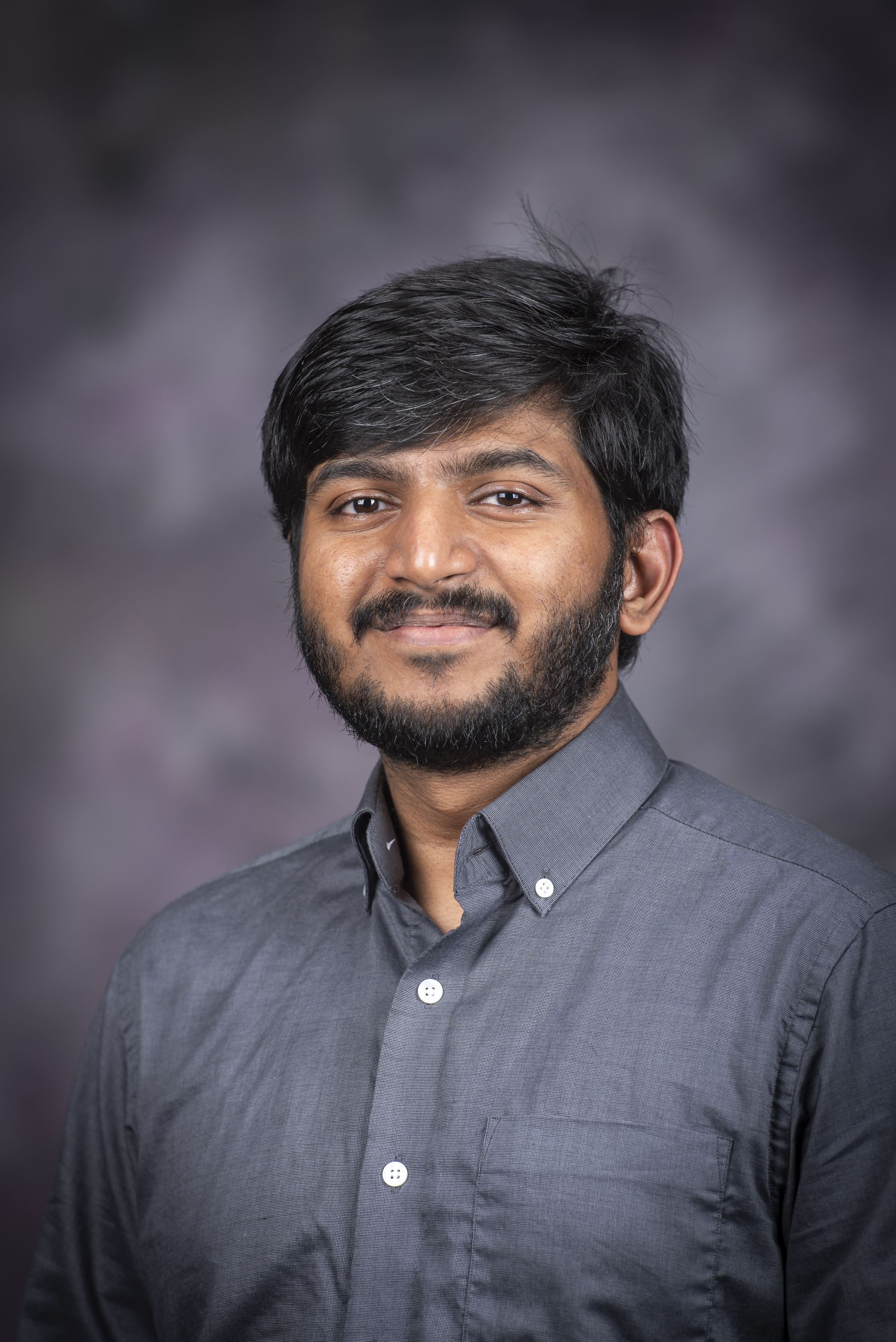
Scientific AI and computational platforms for complex real-world systems.
My work develops agentic AI interfaces, scientific workflows, co-simulation environments, GIS-enabled data pipelines, APIs, model-generation tools, and research software including CLARA, CISCS, and HFG-TK for connecting data, models, simulations, and stakeholder decisions. 8+
years research experience
3
years postdoctoral work
17
student researchers mentored
6
infrastructure domains modeled
4
funded projects
2
grant proposals under review
Research Themes
A connected body of work across agentic AI, reusable scientific workflows, co-simulation, and scientific machine learning.Agentic AI
LLM/RAG and tool-using AI systems that translate stakeholder questions into model queries, simulations, and structured decisions.
Scientific Workflows
Reusable Python frameworks, APIs, data pipelines, and model-generation workflows for interdisciplinary research teams.
Co-Simulations
Coupled simulation workflows for energy, water, stormwater, transportation, weather, and community systems.
Scientific AI
Graph neural networks, tensor completion, sparse reconstruction, and spatio-temporal learning for sparse observations.
Project Portfolio
Selected platforms and toolkits translating scientific AI into resilience modeling, simulation, and decision-support workflows.


Grants and Current Work
Funded and submitted projects supporting AI-enabled infrastructure resilience research.CLARA 2.0
Co-PI, Kansas NSF EPSCoR REI Award, Sub-award #2148878. Scalable agentic AI workflows for infrastructure hardening and resilience planning.
CLARA
Co-PI, Kansas NSF EPSCoR REI Award, Sub-award #2148878. AI-enabled decision support for county-level infrastructure resilience and emergency management.
ARISE
Research contributor, NSF EPSCoR Award #2148878. Supported socially equitable interdependent infrastructure resilience analysis, co-simulation, HFG-based disaster impact analysis, CLARA-related stakeholder engagement, sponsor reporting, and site-visit presentations.
SAFER
Research contributor, DOE Award #DE-EE0010416. Contributed to integrated adaptive resilience analysis for interdependent infrastructure systems, including resilience modeling workflows, infrastructure impact analysis, and sponsor-facing technical communication.
PRAIRIE Center
Lead Researcher, Cross-Theme Integration, DOE BER. Integration of Earth-system models, infrastructure simulations, and regional digital-twin workflows.
ASCENT
Co-PI, DOE Genesis Mission. Uncertainty-guided AI surrogate workflows for coupled energy and computing infrastructure.
Awards
Research and academic recognition. February 2023
Keshav-Rangnath Excellence in Research
Indian Institute of Technology Madras
Chennai, India
Awarded for technical rigor, originality, high-impact publications, patent activity, and contributions to estimation strategies for sparsely observed cyber-physical systems.
July 2014 - May 2016
AIEEE Merit Scholarship
National Institute of Technology Karnataka
Surathkal, India
Merit scholarship covering undergraduate tuition expenses for securing a top 0.1% rank among approximately 1 million applicants.
Appointments and Roles
-
Co-Principal Investigator
Kansas State University
2025 - PresentCo-created CLARA 1.0 and leads CLARA 2.0 development for AI-enabled resilience planning, automated model generation, multi-domain co-simulation, and agentic workflows.
-
Postdoctoral Researcher
Kansas State University
2023 - PresentDevelops systems engineering frameworks for resilient energy and infrastructure systems, including cascading failure modeling, critical asset identification, hardening, and restoration planning.
-
Doctoral Researcher
IIT Gandhinagar and IIT Madras
2018 - 2023Built machine-learning and estimation methods for sparsely observed cyber-physical systems, including GNN-based state estimation and observability analysis.
-
Big Data Developer
Wipro Technologies, Bangalore, India
2016 - 2017Developed infrastructure-as-a-service solutions supporting scalable data analytics workflows for finance-sector applications, with contributions to infrastructure automation and backend data-processing environments.